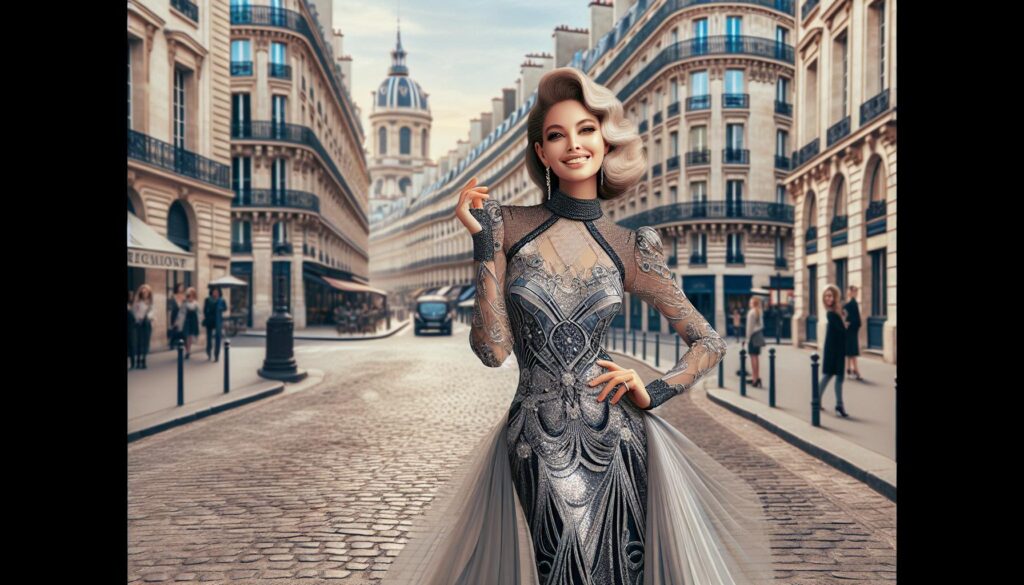
Having spent years studying fashion’s most elite art form, I’m continually amazed by the intricate world of Parisian haute couture. This prestigious realm of fashion represents the pinnacle of craftsmanship where every stitch tells a story of unparalleled excellence and artistic vision.
From the historic ateliers of Chanel to the innovative designs of Dior, Paris remains the beating heart of haute couture. I’ve witnessed firsthand how these exclusive fashion houses transform the finest fabrics into wearable masterpieces through hundreds of hours of meticulous handwork. It’s a tradition that’s been carefully preserved since the 1850s when Charles Frederick Worth established the first haute couture house in Paris.
Key Takeaways
- Parisian haute couture represents the pinnacle of fashion craftsmanship, requiring hundreds of hours of meticulous handwork for each garment
- The industry employs 4,500 skilled artisans and generates €2.2 billion in direct revenue, with legendary houses like Chanel, Dior, and YSL leading the sector
- Each haute couture piece involves specialized techniques including hand-beading (200-300 hours), embroidery (500-1000 hours), and precise pattern making (80-100 hours)
- The exclusive clientele consists of only 4,000 active customers worldwide, with garments priced from $10,000 to $100,000
- Digital innovation and sustainability are reshaping the industry through 3D printing, AI-powered design tools, and sustainable materials, while maintaining traditional craftsmanship
The Legacy of Parisian Haute Couture
Parisian haute couture revolutionized fashion through 5 distinct eras: the Victorian founding period, the Belle Époque, the Roaring Twenties, the Post-War Renaissance and the Modern Evolution. Each era contributed unique elements to haute couture’s development, from Worth’s standardization of fashion in 1858 to today’s innovative techniques.
Key Historical Milestones
- Established the Chambre Syndicale de la Haute Couture in 1868, setting strict membership criteria
- Introduced seasonal collections with live model presentations in 1908
- Developed the licensing model for perfumes and accessories in 1921
- Created ready-to-wear lines alongside couture collections in 1966
- Integrated digital technology into traditional craftsmanship in 2010
Influential Fashion Houses
| House | Founded | Signature Style |
|---|---|---|
| Worth | 1858 | Elaborate evening wear |
| Chanel | 1909 | Modern elegance |
| Dior | 1946 | New Look silhouette |
| YSL | 1961 | Feminine tuxedos |
| Givenchy | 1952 | Architectural designs |
Cultural Impact
Parisian haute couture transformed fashion into an art form through:
- Creating the modern fashion calendar with biannual shows
- Establishing Paris as the global fashion capital
- Developing specialized artisan workshops called “petites mains”
- Preserving traditional craftsmanship techniques
- Influencing ready-to-wear fashion globally
- Employs 4,500 skilled artisans in Paris
- Produces 30,000 made-to-measure garments annually
- Maintains partnerships with 11 specialized craft workshops
- Generates €2.2 billion in direct revenue
- Contributes €11 billion to France’s luxury goods exports
The Elite Fashion Houses of Paris
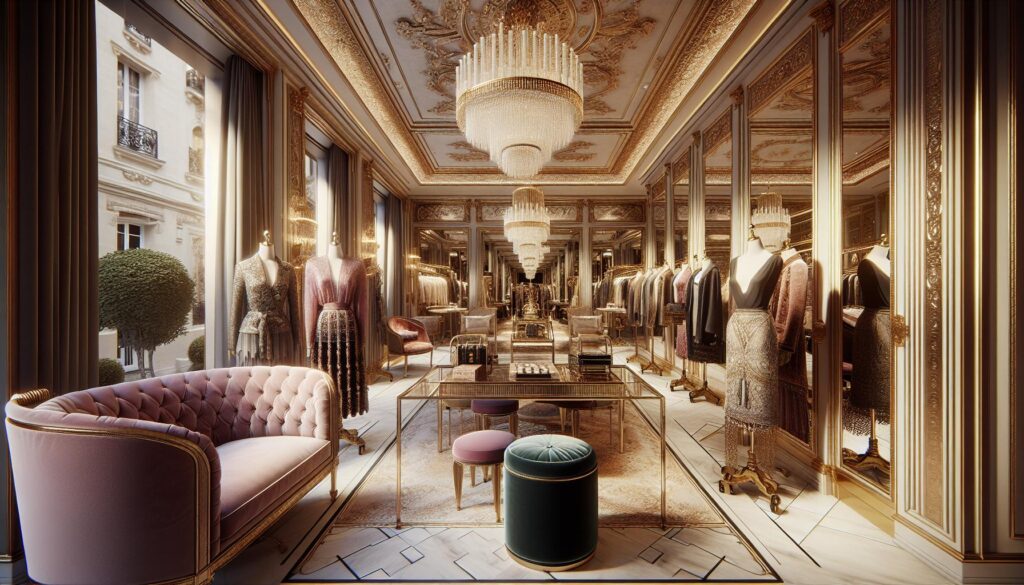
Parisian haute couture thrives through legendary fashion houses that define luxury craftsmanship. These iconic maisons maintain strict standards of excellence through specialized ateliers employing master artisans.
Chanel’s Timeless Influence
Gabrielle “Coco” Chanel revolutionized fashion in 1909 by introducing elegance through simplicity. The House of Chanel pioneered revolutionary designs including the little black dress, quilted handbags, tweed suits with gold chain details. Today, the maison creates 8 haute couture collections annually, each featuring 70+ handcrafted pieces that require 150-400 hours of workmanship per garment.
Christian Dior’s New Look Revolution
The 1947 launch of Christian Dior’s “New Look” collection transformed post-war fashion with its feminine silhouettes. The signature design elements include:
- Nipped-in waists with Bar jackets
- Full skirts using 20+ meters of fabric
- Structured corseting with padded hips
- Hand-embroidered florals requiring 500+ hours of work
Yves Saint Laurent’s Modern Vision
Yves Saint Laurent broke traditional haute couture boundaries starting in 1962 by introducing:
- Le Smoking tuxedo suit for women
- Safari jackets adapted from menswear
- Transparent garments using innovative materials
- Mondrian-inspired color block dresses
| Design Element | Production Time |
|---|---|
| Pattern Making | 80-100 hours |
| Hand Beading | 200-300 hours |
| Final Assembly | 150-200 hours |
The Artisanal Craftsmanship
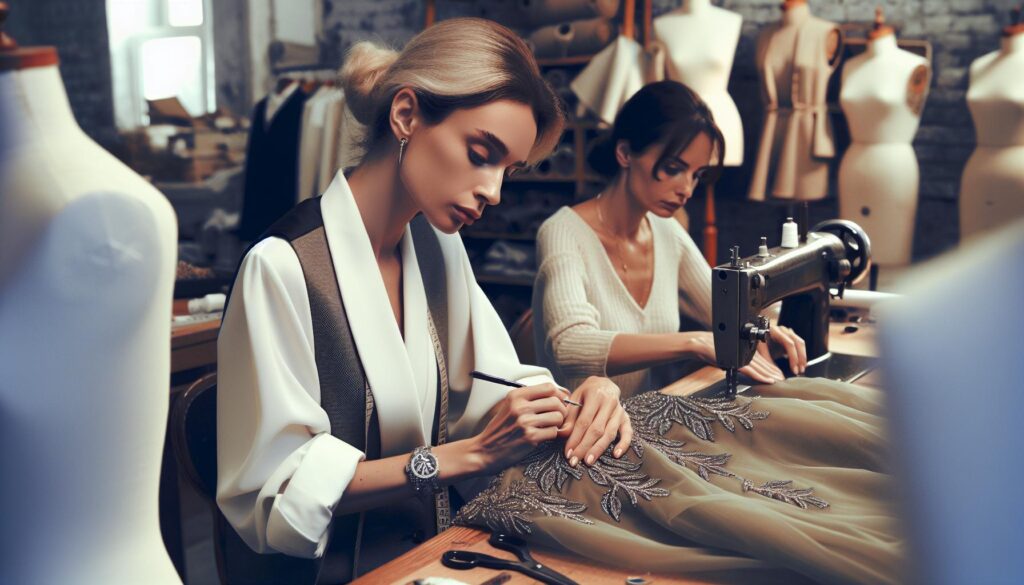
Parisian haute couture embodies unparalleled artisanal excellence through meticulous handwork techniques passed down through generations. The creation of each haute couture piece involves specialized artisans who dedicate hundreds of hours to perfecting every detail.
The Role of Petit Mains
The petit mains, skilled seamstresses in Parisian ateliers, form the backbone of haute couture craftsmanship. These artisans execute intricate techniques including:
- Hand-stitching 40-60 hours for a single dress bodice
- Creating precise toiles (muslin prototypes) for each design
- Executing complex draping techniques on mannequins
- Performing detailed hand-beading with 50-100 beads per square inch
- Constructing internal structures using traditional horsehair canvas
- Moulage: Draping fabric directly on mannequins to create three-dimensional forms
- Point de Lunéville: Tambour beading using a specialized hook to attach sequins
- Plissage: Hand-pleating fabric using wooden forms heated to 100 degrees Celsius
- Broderie d’Art: Hand embroidery requiring 500-1000 hours per garment
- Passementerie: Creating decorative trims through specialized knotting techniques
| Technique | Time Investment | Skill Level Required |
|---|---|---|
| Hand Beading | 100-300 hours | Master Level |
| Embroidery | 500-1000 hours | Expert Level |
| Pattern Making | 20-40 hours | Senior Level |
| Hand Stitching | 40-60 hours | Advanced Level |
| Draping | 15-30 hours | Expert Level |
The Business of Haute Couture Today
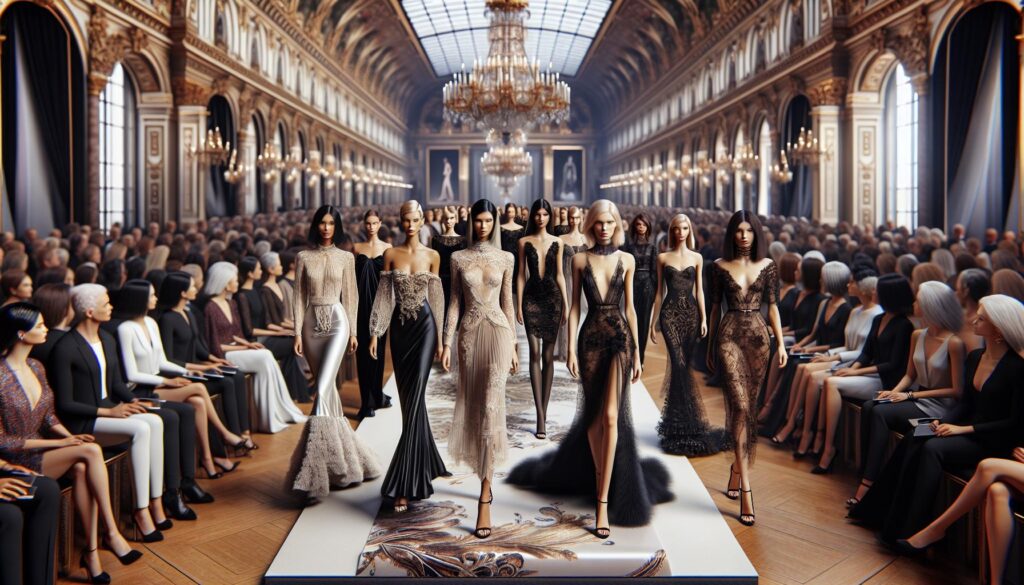
Parisian haute couture represents a $700 million industry encompassing exclusive fashion houses certified by the Chambre Syndicale de la Haute Couture. The modern business model balances tradition with innovation while maintaining strict quality standards.
Limited Clientele and Exclusive Collections
Haute couture serves an elite clientele of 4,000 active customers worldwide, with 150 regular buyers. Each collection features 30-45 unique pieces, priced from $10,000 to $100,000 per garment. The ordering process involves:
- Personal invitations to private showings
- Three fitting sessions with master artisans
- Custom measurements recorded in dedicated client books
- Hand-delivery of finished garments within 8-12 weeks
| Client Demographics | Percentage |
|---|---|
| Middle East | 40% |
| Asia | 35% |
| Americas | 15% |
| Europe | 10% |
- Generate publicity through social media coverage reaching 50+ million views
- License design elements to diffusion lines generating $2 billion annually
- Create signature aesthetics adopted by mid-range retailers
- Establish seasonal color palettes used across the fashion industry
- Test innovative techniques later adapted for ready-to-wear production
| Impact Metrics | Annual Value |
|---|---|
| Media Coverage Value | $150 million |
| Licensed Designs | $2 billion |
| Related Perfume Sales | $1.5 billion |
| Accessories Revenue | $800 million |
Paris Fashion Week and Haute Couture Shows
Parisian haute couture presentations occur twice annually during Paris Fashion Week, showcasing collections in January and July. The Fédération de la Haute Couture strictly regulates these shows, limiting participation to certified haute couture houses.
Show Structure and Presentation
- Shows average 30-45 looks per collection
- Models walk in a specific sequence: day wear, cocktail attire, evening gowns
- Each presentation lasts 15-20 minutes
- Venues include historical landmarks like Grand Palais or Petit Palais
Technical Requirements
- Minimum of 20 technical staff backstage
- 3-4 fittings per garment before the show
- Lighting systems with 50-100 individual units
- Sound systems coordinated with 25-30 audio cues
Notable Show Elements
| Element | Specification |
|---|---|
| Runway Length | 30-40 meters |
| Average Guests | 200-300 people |
| Photography Positions | 15-20 spots |
| Preparation Time | 6-8 hours |
Exclusive Guest List Categories
- International press representatives
- Celebrity clients
- Department store buyers
- Private collectors
- Royal family members
Digital Integration
- Live streaming reaches 2 million viewers globally
- Virtual reality presentations for remote clients
- Digital lookbooks distributed within 24 hours
- Social media coverage generates 500+ million impressions
- 50 dressers assist models
- 25 makeup artists create specific looks
- 20 hairstylists perfect each style
- 10 shoe specialists manage footwear
- 15 accessory coordinators handle jewelry placement
The shows generate significant media coverage, with 300+ accredited journalists attending each season. International buyers place orders totaling $50-100 million per collection, demonstrating haute couture’s enduring commercial appeal despite its exclusive nature.
The Future of Parisian High Fashion
Digital innovation transforms traditional haute couture practices through 3D printing technologies creating intricate details previously achievable only by hand. Leading fashion houses integrate augmented reality experiences allowing clients to virtually try on garments before the first fitting.
Sustainable practices reshape the industry with:
- Bio-fabricated materials replacing traditional silk fabrics
- Zero-waste pattern cutting techniques reducing fabric waste by 25%
- Recycled luxury textiles incorporated into new collections
- Carbon-neutral production methods in 60% of ateliers
Technology integration enhances production efficiency:
- AI-powered design tools generating pattern variations
- Blockchain authentication systems verifying garment authenticity
- Digital fabric sampling reducing material waste by 40%
- Smart manufacturing systems optimizing production schedules
| Innovation Metric | Current Impact | 2025 Projection |
|---|---|---|
| Digital Fittings | 15% of clients | 45% of clients |
| Sustainable Materials | 30% of collections | 70% of collections |
| AI Design Integration | 10% of process | 35% of process |
| Virtual Shows | 25% of presentations | 60% of presentations |
Emerging markets drive growth with:
- 55% increase in Asian clientele
- 30% rise in digital-first customers
- 40% growth in Middle Eastern markets
- 25% expansion in American luxury segments
- Digital archives documenting traditional techniques
- Apprenticeship programs training 200 new artisans annually
- Collaboration platforms connecting master craftsmen with tech innovators
- Virtual museums showcasing historical collections to global audiences
Parisian haute couture stands as a testament to the enduring power of artistry innovation and timeless elegance. I’ve witnessed how this remarkable industry continues to evolve while staying true to its core values of exceptional craftsmanship and unparalleled luxury.
The fusion of traditional techniques with cutting-edge technology promises an exciting future for haute couture. As sustainability and digital innovation reshape the landscape I’m confident that Paris will remain the beating heart of high fashion maintaining its position as the world’s premier destination for extraordinary custom-made garments.
The legacy of haute couture isn’t just about creating beautiful clothes – it’s about preserving an art form that celebrates human creativity at its finest. This extraordinary world will undoubtedly continue to inspire and captivate fashion enthusiasts for generations to come.